Labels

Monday, 24 October 2016

Decisions, decisions always decisions.


I found myself with a decision of Solomon.

The struggle I faced was with David Nicholas Wilkinson the hard nosed producer, and David Nicholas Wilkinson the flamboyant arty director/ co-writer, and also the presenter of THE FIRST FILM.

When I was in New York at the historic screening of the film at the Morris-Jumel Mansions showing the Louis Le Prince films for the first time there, 126 years later than the Le Prince family had planned, John Duncan who is the Visitor Economy Business Development Manager at Visit Leeds introduced me to Mark Schubin a member of the Society of Motion Picture & Television Engineers an important behind the scenes organisation. It was founded by Charles Francis Jenkins, who also features in THE FIRST FILM because he was also a very important pioneer in the race to capture the moving image.


In 1930 the Leeds City Council regonised and acknowledged Le Prince's achievements by unveiling a plaque to him on the site of his former workshop in Leeds, now on the site of Leeds Beckett University.


In 1931 SMPTE gave him their highest award, an honorary membership.


For over 60 years these were the only bodies or organisations to offical recognise Louis Le Prince and his work.


Mark Schubin pointed out to me that in six weeks from those New York screenings it would be SMPTE's 100th Anniversary Gala dinner. He thought THE FIRST FILM would be the prefect film to play to the members. Therefore he asked if I  would allow him discuss if the executive committee to see if they would be interested.


Would I ?

I would LOVE it. This would be the perfect end of a long eighteen month odd elongated release that I have engineered with the film where I released it in both the UK and in the USA (rare for a very small UK company) via Belgium, Ireland and Russia.

After a few weeks they came back and they would be delighted to screen the film......but......why is there always a but.

But, I had to either put up the costs myself or find a sponsor.

If I had had three or four months I would have been able to do this, but I had less than a month.

The Leeds City Council had supported the historic screening in New York but since they made that award new UK Government cuts could result in the loss of around 2,000 jobs over the next few years.  One could hardly expect them to cover these costs.

I hit the phone and the internet. I tried an eclectic group of people from the obvious like Jim Jannard owner of Red Cameras who feature in the film and would attend the Gala on the night to very random people like Sir Tim Rice bizarre suggestion by Eileen Atkins pulling his name out of a hat. I even thought of asking those well off individuals that hail from Leeds - Barbara Taylor Bradford, Marco Pierre White, Alan Bennett, Scary Spice etc, but as I had tried them  over the previous thirty four years when trying to finance the film and they never came back to me, I felt it would be a waste of my time, and, as always somewhat humiliating having to go around with a begging bowl. Sixty years old and still I beg just as I had done when I started producing at twenty three.

It soon became apparent that the only way it would happen was if I put up the costs.

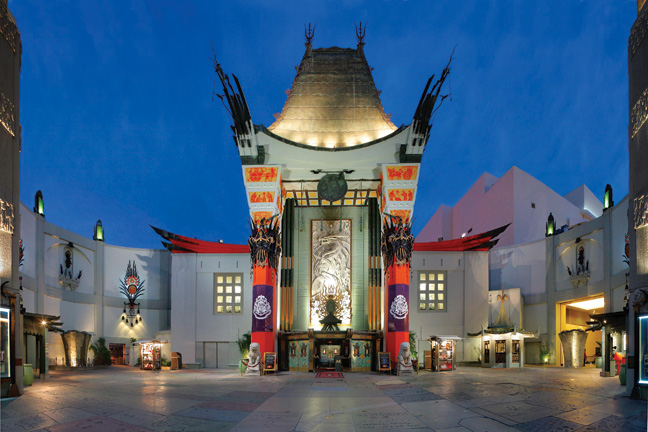
The Chinese Theatre in Hollywood, my airfare, hotel and car hire came to around £6,000,  and possibly more.


£6,000 is hardly a fortune.

Given I am not rich, it would have to be recouped from the income from the exploitation of THE FIRST, some of which is on its way, but has yet to actually hit the bank account. It also does not pay off that much of the investment, and even with SEIS releif for the investors, there is still a significant amount to recoup.

Making films is easy. Making those films profitable, is the really hard task.

David Nicholas Wilkinson the director and presenter would have such a gay old time at the Gala, swanning around with the likes of Douglas Trumbull (who comes into the film) and James Cameron both of whom were to be given honours by SMPTE. He/I would hobnob with senior employees of Warners, Paramount, 20th Century Fox, Universal, Walt Disney, HBO, Google, Canon, Netflix, CBS, Dolby, Sony, Amazon etc all of whom would be attending the Gala. He/ I could also raid the BAFTA LA membership to invite an audience for his late afternoon screening. He would no doubt be feted
by them all .... OK some of them ....... well maybe a few.

However.......and there is always a however.

David Nicholas Wilkinson the producer has a fiduciary duty to the investors of THE FIRST FILM. They had provided the production finance over three years before, and they have still actually to be repaid a penny of that money which they had entrusted to him.

I thought about it long and hard for over a week.

I was like Robert Mitchum in NIGHT OF THE HUNTER but instead of "love" and"hate" tattooed on my fingers I had "art " and "commerce" mentally on mine.


Yes it was a Hollywood screening to a very prestigious audience, the best the film would receive but it was an audience of technical people. No one in acquisition would be there. No agents or people who could have helped bring about a good US TV license. No journalists to review the film to  an influential buyers.

My team who worked so hard to bring the film about, for less than the going rate, Irfan Shah, Bill Lawrence, Don McVey, Christopher Barnett, David Hughes etc would appreciate such an audience.

The SMPTE audience were but backroom boys (and girls), but people who would greatly appreciate the film more than any other. An audience for whom I suppose I had really made the film for. If I could convince the current members of the SMPTE that Leeds was where the worlds first film was made, then the main goal for making the film would be achived, for these men and women would collectively ensure that no more would Le Prince and Leeds be excluded from the film history books.

However it was going to cost £6,000.

And that was the problem.

I could never have made the film without the support of my investors, and the conclusion I came to is that I could not spend any more money and that my duty now was to secure them as much return as possible on that investment.

The investors are all millionaires and in their 80's and the loss of £6,000 to them collectively is a small sum indeed but it is the principle. The film has had a far greater profile than I had hope for, and now there is only one more goal to achieve with THE FIRST FILM, and that is to make the film a profitable one.

I would love the film to have screened before this audience, and I am sure in time I might come to regret it, maybe. But it was just a screening.

If my investors had not supported me with the production funding, and the film had never been made, now that is something I would have most definitely regretted for the rest of my life.

I feel certain that Louis Le Prince would agree with me, that I made the right decision.


Saturday, 22 October 2016

I worked for the 11th Duke of Northumberland.......but he was dead at the time.


Henry Percy was a neighbour of mine so I took a great interest in him and his life. When I say neighbour I had a two up two down terrace house in Isleworth and he owned the second largest house ( in Isleworth) in the whole of Greater London, the first being Buckingham House.

He also owned a huge castle in the Northumberland, and also had land in the West Country and Yorkshire. 


All I really knew about him was that he admired beautiful women and he loved films. He always came across as a friendly likeable man, not that I ever met him, but just from press reports and word of mouth. 
Thus I knew it was only a matter of time that someone as rich as him would finance a film. 
He had, I was later told, a love of Africa and of elephants and therefore when a script called LOST IN AFRICA came his way, he not only fully financed it, he also acted in it. 


One year after it was completed he died at the very young age of 42 never having married.
His brother, now the 12th Duke, keen for the Estate to claw back some of the budget I was told ( £5 million then about £10 million today) asked his lawyers to find someone to distribute LOST IN AFRICA in the UK. I understood I was the very last on the list. I watched the film. Oh dear. 
I wanted to help the dead Duke as his heart was in the right place and so said I would do it, if the Estate either put up the P&A or I was able to raise this via a TV sale. The fact that one of the richest landowners in the country said no to the former gives you an idea of how good the film is.
I was uable to find a UK broadcaster to pre-buy the TV rights. Therefore it is yet another, in a long line of British financed films, that sit on a shelf somewhere gathering dust, whilst the 11th Duke who made it, became dust.


I was told at the time, that over the years Henry Percy had been asked to invest in films like CHARIOTS OF FIRE and GHANDI but as he was only the Earl then, and not having access to the Estate funds, could do nothing.
It is so sad, that even with all his money, and one assumes the best advisors that he could buy, that this genuine lover of film as an art form, only involvement with a film, was a turkey!

To most of us he had it all.

But did he ?


Friday, 9 September 2016

THE CURSE OF LOUIS LE PRINCE (the long and strange 33 year battle to get THE FIRST FILM to the cinema)


Curses are a wonderful plot device, used by many in my profession over the years but I never believed that they actually existed, until I tried to make a documentary film of the Louis Le Prince story.    


Le Prince was a French born artist, chemist and inventor who on 14th October 1888 made the world’s first film in Leeds, Yorkshire, England. The reason he was mostly unknown outside Yorkshire’s borders for over 120 years was because on 16th September 1890 he boarded the Dijon to Paris train, when on a French holiday and disappeared off the face of the earth. Because no body was ever found no one could fight Le Prince’s claim for seven years, so Edison and the Lumiere’s got the march on his breakthrough work and he was forgotten.


A curse ?

I was told the story at school in Leeds in the 1960’s and I always thought it would make a great documentary.  In 1982 celebrating the success of a film I had made of Virginia Woolf’s TO THE LIGHTHOUSE, which was nominated for a BAFTA award, and  was the first real independent production with BBC,  I was asked by the BBC what other projects I had. I pitched the Le Prince story. They did not believe it and just thought this was unfounded boast from a proud Yorkshire man and so said no.    


One aspect I thought that might win me British establishment financial backing was proving 100% that the world’s very first film was British. Surely one UK broadcaster or Arts/ Lottery funding entity would want to champion this.  The British Broadcasting Corporation would reject it a further two times, so would the British Film Institute, British Sky Broadcasting, UK Film Council and every other British film and TV funding source over the next 31 years. 


The French have told the lie that the Lumiere brothers invented cinematography in Lyon in 1895. They did not. Le Prince was before them as were Eitenne Jules Marey (French), Wordsworth Donnisthorpe (also from Leeds), William Freise- Greene ( British), Birt Acres (American), Charles Francis Jenkins(American), Thomas Edison (American) & William Dickson (British) and others. The Lumiere’s were Jonny Come Lately’s. My obsession just grew. I had to tell the world the truth not just for Le Prince but for Leeds.


Surely my fellow Yorkshire men and women would support me financially. Over the years I would approach the funding organisations Yorkshire & Humberside Arts (the Chairman Sir Ernest Hall was at the time the co- financier of my then latest film COAST TO COAST), Yorkshire Tourist Board, Yorkshire Forward, Screen Yorkshire, Yorkshire Media Production Agency, Leeds Partners, Welcome to Yorkshire and hundreds of other Yorkshire businesses and individuals but only Keith Loudon a former Lord Mayor of Leeds agreed to back me.


The first people to put money into the bank account were The Leeds Philosophical & Literary Society,  Le Prince had been a member, amounting to about 1% of the budget. 

This was for me, in many ways the most important investment, not the amount but what it represented. It was from Leeds based organisation and they have the direct link to the great man himself. Therefore when Le Prince's descendants agreed with me that his archive should be in the UK under safe keeping there was no better organisation to take custody of these than the LP&LS


With my distributors hat on I have hosted many panels/talks over the years to budding filmmakers in the UK, Ireland, Turkey, Lithuania, Belgium and France where I say to emerging writers, directors, producers that if they have not got anywhere with their project and no one has shown any real interest after five years then they should give up and move on.

With more than 5 x 5 years going by I was still ignoring my own advice !

Was I stupid or stubborn or an idiot or was I really on to something ?

When it all boils down to it films are just a form of story telling and this story - man comes up with idea, makes it work before anyone else, then just before he shows it to the world mysteriously disappears - was a cracking yarn.


Or was it just me who thought so ?


From 1997 to 2005 when British Chancellor Gordon Brown changed the tax rules, as an initiative to encourage British film production, an alleged £6 billion of tax relief was given for British qualifying films. During that time all manner of good, bad and indifferent films were made. There were ludicrous schemes including ones where investors apparently made a profit even if the films were never sold. Needless to say Her Majesty’s Revenue & Customs have been diligently investigating so many of these scams….er schemes resulting in numerous successful prosecutions. Yet with all this going on, filming any old crap, not one of these film funds wanted to back my film. It is without doubt the hardest film for which I have raised money. 


For years the rejection to my film was mainly because everyone thought the story was not true. I don't know why but so many thought Leeds and the birthplace of film was comical but they did. Why not Leeds ? Leeds was a major industrial centre responsible for a great many innovations of the centuries.  This rejection of the truth only made me more determined to make the film.  In 2006 this disbelief started to change with the films being made available, for the first time for public to see, via You Tube which then prompted a few people who knew the real story to start to write about Le Prince online.


Irfan Shah who co-wrote the film  and was also one of the co-producers working with me longer than anyone else who joined our merry band. I found him in 2009 and said he yes straight away, but after a couple of years I think he was wondering if we would actually make it.  He lived in Leeds which was important. I also asked him to research elements but not to tell me. I was keen that I actually discover onscreen. Therefore I purposely did not learn too much before filming began. There are forty two scenes in the film that are one take only, and with me learning much, if not all that information, on camera. You can notice this as I stumble on words, don't finish sentences and mispronounce somethings - just like you do in real life. I am not sure if this works artistically but for me it was very important to find the truth out in the moment. 


I was finally was granted the chance to make the film in 2013 thanks to the UK Government’s Seed Enterprise Investment Scheme which allows UK investors an immediate 50% tax rebate on the money they invest in any start up business. As film investment is very risky it was just the incentive I needed. It is not meant as a film vehicle but I adapted it to suit my needs. Keith Loudon who never wanted any credit on the film backed me, as did the American born Sir Robert Worcester (where would the British film industry be if it was not for American money) and the film lover John Chittock via a Foundation set up after he died. They covered £85,000 of the £130,000 budget. To those unfamiliar with film production this may seem like a lot of money but the production was made over a two-year period and thirty nine people received payment, many more did not and we filmed not just in the UK but France and the USA.

Several people who worked on the film did walk away because I did not have that much money to pay them. But others like Irfan, Don McVey, Chris Barnett, David Hughes, Bill Lawrence, Dave Palser, Mark Sloper and his 400 Company, Mark Davis and all those who are in the film believed in the project and getting the truth out there and so were very loyal and stuck with me. I have still have not paid myself anything.


Another feature documentary I was involved in making, as an executive producer, at the same time had a budget of over ten times that amount and ran for exactly the same number of minutes. The final bit of money came from my share of the sale of my parents’ old house in Leeds. The irony. I could only complete this film, which is a love story to Leeds by disposing of my last concrete link to Leeds.


I filmed and edited over a two-year period with fourteen different filming blocks, in three countries which came about purely because I far less money than I really needed.  This meant that I had to fit in around everyone else and use them in their downtime, when they would give me a rate less than their normal one. This was especially true for David Hughes the editor who was vitally important to the crafing of the tale.  The company he worked for then, the 400 Company gave me such a fantastic deal but they did have more financially rewarding work, to make working on my film viable for them, which of course had priority.


I had thought the stopping and starting would be a disadvantage but it greatly added to the creative process allowing me breathing space. Had the film been made conventionally, in one go with prep, production and post-production all within an eight month period, I don't think it would have turned out so well. So as it happened, I made a better film because of the financial limitations.


The most enjoyable part of the filming was in the USA. A joyous road trip with only my cameraman Don McVey filming in Memphis, Cleveland, Philadelphia ( a city that played a small but crucial role in the birth of film, but no one in Philadelphia knows this ), New York and Fire Island. I loved every minute of this American adventure which was not at all like work, but a holiday. Throughout the two year filming period people would joke to me "don’t go on holiday" as Louis Le Prince disappeared on a holiday, and if you do, don’t get on a train. Just a few days after I arrived back from the United States my brother Tony, holidaying with his partner and their children in Jamaica, was tragically drowned in a freak accident. 


The film is dedicated to him.


The only member of the film establishment I was able to persuade to be involved in the  production was Adrian Wootton the CEO of Film London and CEO of The British Film Commission. I asked many others but they all declined because not knowing the story, they were not sure if I was correct, and a few leading figures even thought I was making a mockumentary and that my intention was to make fool of them.  


The curse was temporarily lifted when Chris Harris of the UK’s Picturehouse cinemas agreed to book the film. He became the first person in the UK film industry to back it, after 33 years.  Prof Jason Wood of Home Manchester (now the best arts complex in the UK) rang me to say he was also booking the film, and went on to state that he found it extraordinarily moving and that he was so proud to say he knew me. In the past Jason has been extremely critical about many of my films telling me exactly what he thought of them so I knew he assessment was genuine. His was my first actually review.


This was an immense relief. At last after so long two influential British film establishment figures supported the film. Because of so many rejections over the years, I was somewhat worried that THE FIRST FILM had become a vanity project that would end up as a home movie just for me. Other independent cinemas then came on board too.


Having been told for three decades that the story would not be of interest to anyone it had its world première on 22nd June at the Edinburgh International Film Festival 2015 and was released in UK cinemas on 3rd July 2015. As I always knew they would, the press went mad for the story. The film featured on News At Ten ( so rare for a documentary film) BBC Radio 4's Today programme, BBC Radio 3, ITV's Calendar AND BBC's Look North (rare to do both). I conducted feature articles in the Telelgraph, Times, Express, BBC Online, Yorkshire Post of course. Numerous other UK and Irish TV, radio and newspapers featured editorials as well as reviews, and I even appeared nationwide on CBS This Morning in the USA. 


The reviews were far better than I had expected. An earlier feature documentary I made was torn apart by the critics with only 24% of the reviews above average. 87.5% of all the UK reviewers,   almost forty of them in all, gave THE FIRST FILM an above an average rating. It's 89% from the press on Rotten Tomatoes. 


The film opened in London’s prestigious Lumiere Cinema in London.

What on earth was I thinking of ? 

I forgot the curse. I arrived for the Q&A and there was no poster and they had not promoted it at all. Allegedly Westminster University who own the cinema wanted to bury my film because they thought I attacked the Lumiere’s. I do not. I just tell the truth. These were the worst of all the screenings. The curse, the curse !

Of course in that true spirit of the curse the film has played in Moscow, Ghent, Wolverhampton, Ipswich, Bradford, Stockton, Edinburgh, London, Montreal and New York more than it has played in Leeds. Even the Hyde Park Picture House owned by the Leeds City Council, where we held the Gala, and which features within the film, only ever played it once.


How can anyone prove to me that there isn’t a curse?


Le Prince had chosen to launch his invention to the world, not in Leeds nor London or Paris but in New York. This was partly because since 1882 he was living in the city, but it was also because he knew instinctively that America would be more important for the growth and development of film than any other country. Ever the showman he had selected George Washington’s old headquarters the Morris -Jumel Mansion in Washington Heights to be the world’s very first movie theatre. 


But it was not to be. Just six weeks before what would have been an historic screening, he vanished, never to be or heard from again and he was largely forgotten, except in Leeds where he has been remembered and celebrated since 1930. The Leeds City Council have alone been his champion. 


Like every British filmmaker of my generation America is THE country to have your film seen. With THE FIRST FILM is double important. Thanks to sponsorship from the Leeds City Council Louis Le Prince’s three surviving films screened at Morris- Jumel Mansions in New York with the full support of Carol Ward, the Curator and one of the historians in the film, on 8th & 9th September 2016- 126 years late, when they appear in a screening of THE FIRST FILM.

It was squaring the circle. 


These screening, chosen by the New York Times as a must see event, were for me the most important ones we could possibly have had. It had taken me 34 years to bring this viewing about, and now with this showing it will at long last prove the truth in America - that the world’s very first films were made by the French born, American citizen Louis Le Prince and he filmed them in my city of Leeds.


So the curse is lifted ?

Well in part anyway. 

I now have only the French to convince but so far they are ignoring me. At the Cannes Film Festival this year a French producer called my film a total lie, and he had not even seen it. It does not matter that Louis Le Prince was French born, because what he did, he did in England not France AND he was by then an American citizen.  Wars have been fought for less. Would this ever end ? Would the French finally, after over 120 years of crediting the wrong Frenchmen, acknowledge that the worlds very first filmmaker was Louis Le Prince? 

Now with THE FIRST FILM completed and available worlwide for all to see surely they would now hail him for his pioneering work ?

Surely. 


On the very day of the Leeds Gala Première on 1st July 2015, the Channel Tunnel, linking Britain and France under the sea, was purposely closed – by the French.


CLICK ON THE LINK BELOW FOR THE TRAILER


( photos Mark Davis and others )

© David Nicholas Wilkinson. 2016. All Rights Reserved.